
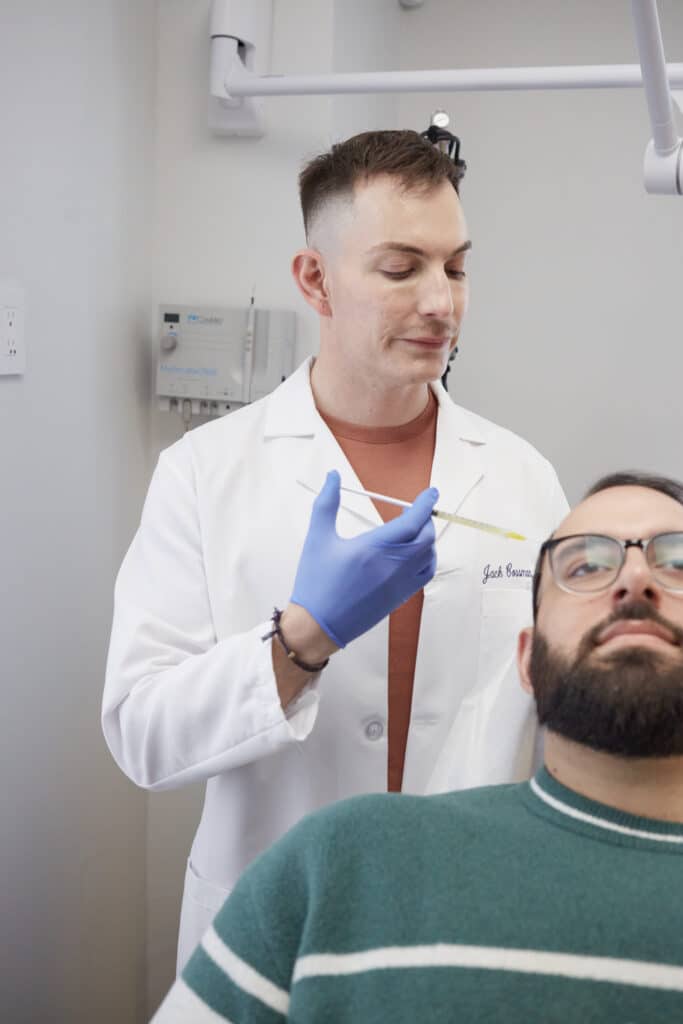
If you are looking for a treatment that works with your body’s own natural healing components, platelet-rich plasma (PRP) injections may be worth considering. PRP is created from a small sample of your blood and contains a concentrated amount of platelets, which release growth factors involved in tissue repair and renewal. In cosmetic dermatology, PRP may be used as part of a personalized approach to concerns such as hair thinning or skin rejuvenation, depending on your individual needs.
Upper West Side Dermatology provides individualized care backed by a team of board-certified dermatologists with experience across medical, surgical, cosmetic, and pediatric dermatology. Rather than taking a one-size-fits-all approach, the team evaluates your concerns and goals to determine whether PRP injections or another dermatologic treatment is an appropriate option for you.
What is PRP (Platelet-Rich Plasma)?
Platelet-rich plasma (PRP) is a medical treatment that uses a patient’s own blood to promote healing and stimulate regeneration. It is a form of regenerative medicine. PRP is prepared by taking a sample of the patient’s blood and separating the platelets from other blood components through centrifugation. The resulting plasma contains a higher platelet concentration than normal blood.
How do you prepare for PRP (Platelet-Rich Plasma)?
Similar to a blood draw, patients are asked to drink plenty of water the day before to make the blood draw easier overall and to eat a well-balanced meal the day of. Before beginning the PRP procedure, schedule a consultation to evaluate medical history, current health status, and the condition being treated to determine if PRP therapy is appropriate.
Why is PRP (Platelet-Rich Plasma) performed?
Platelet-rich plasma (PRP) therapy is performed for various reasons across different medical specialties. The main goals of PRP therapy include promoting tissue healing, reducing inflammation, and stimulating tissue regeneration. In dermatology and cosmetics, PRP can be used to stimulate collagen production, improve skin texture, and promote hair growth when injected or applied topically. It can be used in combination with other procedures to help treat various skin conditions such as acne scars, fine lines, and wrinkles.
What can you expect during PRP (Platelet-Rich Plasma)?
- Before the PRP procedure, the healthcare provider will explain the treatment, its potential benefits, risks, and any necessary preparation instructions. This may include avoiding certain medications, such as blood thinners, before the procedure.
- The procedure usually begins with collecting a small sample of the patient’s blood, typically from a vein in the arm. The amount of blood drawn can vary depending on the specific treatment area and the intended use of PRP. The patient then waits for the collected sample to be processed in a centrifuge. The PRP is then extracted from the blood sample for its intended use.
- Injection or Application: Once the PRP is prepared, it is ready for injection or application to the target area. For some treatments, such as PRP facials, the PRP may be applied topically to the skin.
What is the follow-up and recovery like for PRP (Platelet-Rich Plasma)?
- Post-Treatment Care: After the PRP procedure, patients may be given instructions for post-treatment care, which may include avoiding strenuous activities, applying ice or heat to the treatment area, and taking pain relievers if necessary. For certain conditions, patients are advised to follow up with their practitioner to determine noticeable results and if further treatments are recommended.
- Results and Recovery: The results of PRP treatment can vary depending on the condition being treated, the patient’s response, and other factors. Some patients may experience improvement shortly after treatment, while others may require multiple sessions to achieve optimal results. Recovery time can also vary depending on the specific treatment and the patient’s overall health.
What are the potential costs for PRP (Platelet-Rich Plasma)?
PRP therapy may not be covered by insurance, and out-of-pocket costs can vary depending on factors such as the specific treatment protocol, the provider’s fees, and the location of the treatment. For alopecia and other hair loss-related concerns, PRP can be sold in package bundles, as multiple treatments are often necessary for optimal results. For facials and other cosmetic reasons, PRP can be used alongside other treatments such as microneedling, which can affect the overall cost. The starting cost for PRP treatments is around $1,000.
What are the potential risks of PRP (Platelet-Rich Plasma)?
- Pain or Discomfort: Injection of PRP may cause temporary discomfort or pain at the injection site. This is typically mild and resolves quickly, but some patients may experience more significant discomfort, particularly with multiple injections or when sensitive areas are treated.
- Bruising and Swelling: Bruising and swelling at the injection site are common side effects of PRP therapy, especially in areas with a high concentration of blood vessels. These side effects are usually mild to moderate and resolve within a few days to a week.
- Infection: Although PRP is derived from the patient’s blood, there is still a risk of infection at the injection site. Healthcare providers take precautions to minimize this risk, such as using sterile techniques during the procedure. Patients should also follow any post-treatment care instructions provided by their healthcare provider to reduce the risk of infection.
- Allergic Reactions: While rare, some patients may have an allergic reaction to components in the PRP preparation, such as anticoagulants or additives used to activate the PRP. Symptoms of an allergic reaction may include itching, rash, swelling, or difficulty breathing. Patients should inform their healthcare provider of any known allergies before undergoing PRP therapy.
- No Improvement: Despite the potential benefits of PRP therapy, there is no guarantee that it will be effective for every patient or every condition. Some patients may not experience significant improvement in symptoms or may require multiple treatments to achieve the desired results.
Are there related procedures to PRP (Platelet-Rich Plasma)?
Stem cell therapy involves using stem cells to promote tissue repair and regeneration. Like PRP, it aims to harness the body’s natural healing processes. Stem cells can be harvested from various sources, including bone marrow, adipose tissue (fat), or umbilical cord blood. These cells can differentiate into different cell types and have the potential to regenerate damaged tissues.
Why Choose Upper West Side Dermatology for PRP Injections
At Upper West Side Dermatology, patients receive personalized guidance from board-certified dermatologists who can assess both cosmetic concerns and underlying skin or hair conditions. This comprehensive perspective helps ensure that PRP is recommended as part of an appropriate treatment plan rather than simply as a stand-alone cosmetic procedure.
The practice is known for compassionate, individualized care and a collaborative team whose expertise spans medical, surgical, cosmetic, and pediatric dermatology. Several physicians also bring academic and specialized experience to patient care, and the practice includes faculty at Mt. Sinai Medical Center. Patients throughout the Upper West Side and Columbus Circle areas can receive PRP treatment within a full-service dermatology setting focused on both appearance and long-term skin health.
Support Natural Renewal With PRP Injections in Upper West Side, NY
Whether you are exploring PRP for hair or skin concerns, the team at Upper West Side Dermatology can evaluate your needs, explain what the treatment may realistically achieve, and recommend an approach suited to your goals. Call Upper West Side Dermatology at (212) 769-0069 to schedule a consultation and learn whether PRP injections are right for you.