
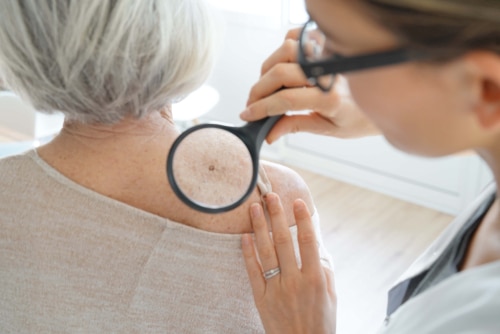
A new bump, spot, or raised area on your skin can be concerning, even when it turns out to be harmless. Benign growths are noncancerous skin lesions that may include moles, skin tags, seborrheic keratoses, cysts, and other common changes. As part of medical dermatology, these growths can be evaluated to confirm what they are and treated when they become irritated, uncomfortable, cosmetically bothersome, or otherwise concerning.
At Upper West Side Dermatology, benign growths are assessed with an individualized approach based on their appearance, location, symptoms, and your medical history. The practice’s board-certified dermatologists provide comprehensive medical, surgical, cosmetic, and pediatric dermatology, allowing patients to receive both diagnosis and treatment within one practice.
Benign growths can be flat or raised lesions that pose no threat to your health. They can often be removed for cosmetic reasons.
- Often, there is a genetic predisposition to certain benign growths, such as cherry angiomas or seborrheic keratoses. Other benign growths, such as skin tags, can occur from friction, especially under the armpits, around the neckline, and along the sides of the body.
- Environmental Factors: Certain environmental factors, such as exposure to carcinogens or toxins, may contribute to the development of benign growths.
- Age: The risk of developing benign growths increases with age, as cellular changes and genetic mutations accumulate over time.
- Unknown Factors: In many cases, the exact cause of benign tumors remains unknown. While certain risk factors may increase the likelihood of their development, benign growths can also occur sporadically without any identifiable cause.
New growths appear over time. Some may first be itchy or irritated but then may become asymptomatic. Often, new growths occur without any signs or symptoms but may simply be noticed by the patient one day.
Once symptomatic, it’s important to have a practitioner evaluate it to determine whether it’s a benign growth and to ensure there is no cause for concern. Often, benign growths remain benign; however, pay attention to symptoms such as changes in size, shape, color, or texture, or any unexplained bleeding.
Through clinical evaluations with a practitioner who often has specialized equipment, such as dermatoscopes or ultrasound machines.
There are often cosmetic treatments for benign growths, such as liquid nitrogen, lasers, electrodessication, or cosmetic removal, depending on the growth and its location.
Proper sunscreen can prevent sun damage spots.
If benign growths become symptomatic and are left untreated, they could pose the risk of turning into cancer or causing further discomfort to the patient. Often, treatment is more for cosmetic purposes.
There can be genetic or immune-related conditions associated with certain types of benign growths. It’s important to give your practitioner your full family and medical history for proper diagnosis and treatment.
Key Takeaways About Benign Growths
- Benign growths can be flat or raised lesions that pose no threat to your health. They can often be removed for cosmetic reasons.
- There are often cosmetic treatments for benign growths, such as liquid nitrogen, lasers, electrodessication, or cosmetic removal, depending on the growth and its location.
- Once symptomatic, it’s important to have a practitioner evaluate what could be a benign growth to make sure there is no cause for concern. Often, benign growths remain benign; however, pay attention to symptoms such as changes in size, shape, color, or texture, or any unexplained bleeding.
Recommended Next Steps
Schedule an appointment with a practitioner for an evaluation to determine whether the growth is benign and to discuss treatment options, if desired.
Why Choose Upper West Side Dermatology for Benign Growths
At Upper West Side Dermatology, evaluation begins with determining exactly what type of growth is present rather than assuming every bump or spot is harmless. The dermatology team can assess changes in size, color, texture, or symptoms and recommend monitoring, biopsy, or removal when appropriate.
Upper West Side Dermatology’s board-certified dermatologists bring experience across medical and surgical dermatology, allowing many common skin growths to be evaluated and treated in the same comprehensive setting. Patients receive compassionate, personalized guidance with recommendations based on both skin health and individual preferences.
Address Bothersome Benign Growths in Upper West Side, NY
Whether a growth is irritating, changing, or simply something you would like evaluated, personalized dermatologic care can help clarify your options. Call Upper West Side Dermatology at (212) 769-0069 to schedule a consultation.